Agentic GraphRAG: The Logical Advantage of AI
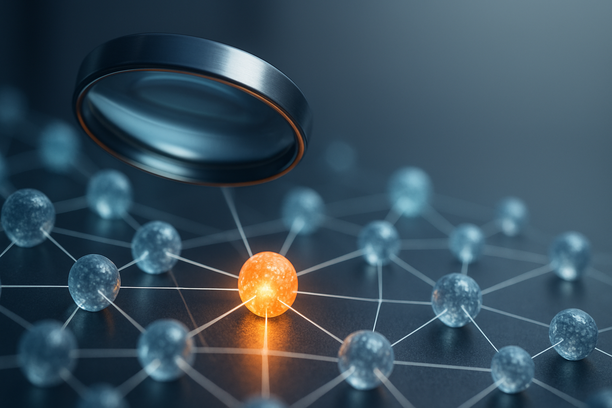
Agentic GraphRAG: When AI Learns to Think in Networks
I watched a talk recently that felt like a lightbulb moment. It showed how combining retrieval-augmented generation (RAG) with graph-based retrieval, called GraphRAG, helps AI actually reason about domain-specific problems, rather than guess. You can watch the talk here: https://youtu.be/AvVoJBxgSQk?si=r0DzM8DohUGOg2m.
Here’s the short version. Large language models are great at pattern matching, but they can hallucinate when a task needs precise logical links, like tracing relationships in a supply chain or connecting legal precedents. Graph databases (think Neo4j) store relationships explicitly. When you combine that with RAG techniques (see the original RAG paper https://arxiv.org/abs/2005.11401), you get agents that retrieve contextually relevant facts plus the network of relationships that matter for reasoning.
The speaker walks through an agent architecture that uses both retrieval patterns, and it’s clever because it balances accuracy, explainability, and cost. In plain terms, the agent pulls facts, then checks how those facts connect, using proximity algorithms and graph reasoning, which helps cut down hallucinations. I liked the example they used (industry-specific troubleshooting), because it’s exactly the kind of messy, detail-heavy problem where plain LLMs stumble.
Why this matters going forward: we’ll see more hybrid agents that blend document search with graph logic, so systems can answer not just “what” but “how” and “why.” Practically, that means smarter diagnostics in healthcare, better risk analysis in finance, and clearer evidence trails in legal research.
Small aside, it won’t be plug-and-play overnight. But if you care about reliable AI, this is a direction worth watching, and experimenting with, today.
Agentic GraphRAG: Wenn KI in Netzwerken denkt
Ich habe mir vor Kurzem einen Vortrag angeschaut, der richtig Sinn machte. Er zeigt, wie die Kombination von Retrieval-Augmented Generation (RAG) mit graphbasierter Suche, genannt GraphRAG, KI befähigt, logisch und vernetzt zu denken. Das Video findest du hier: https://youtu.be/AvVoJBxgSQk?si=r0DzM8DohUGOg2m.
Kurz gesagt: Sprachmodelle sind stark bei Mustern, sie neigen aber zu Halluzinationen, wenn präzise logische Verknüpfungen nötig sind, etwa in Lieferketten oder juristischen Fällen. Graphdatenbanken (z. B. Neo4j) speichern Beziehungen direkt. Kombiniert man das mit RAG-Ansätzen (siehe die RAG-Publikation https://arxiv.org/abs/2005.11401), entstehen Agenten, die Fakten plus ihre Vernetzung berücksichtigen.
Der Vortrag zeigt eine Agenten-Architektur, die beide Abrufmuster nutzt. Das Ergebnis ist besserer Output, der erklärbarer und kosteneffizienter ist. Praktisch heißt das: Der Agent holt sich relevante Informationen und prüft dann, wie diese Informationen miteinander verbunden sind, mithilfe von Nähe-Algorithmen im Graphen. Das reduziert falsche Antworten deutlich.
Ausblick: Wir werden mehr hybride Agenten sehen, die Dokumentensuche und Graphlogik vereinen. Das bedeutet verlässlichere Diagnosen im Gesundheitswesen, fundiertere Risikoanalysen in der Finanzbranche und nachvollziehbare Beweisketten in der Rechtsforschung.
Kleiner Gedanke zum Schluss, ganz persönlich: Es wird nicht sofort alles sauber laufen, aber für verlässliche, domänenspezifische KI ist GraphRAG ein echter Fortschritt. Worth exploring.











Kommentar abschicken