LLMs Understanding: AI Pioneer Yann LeCun Spars with DeepMind’s Adam Brown
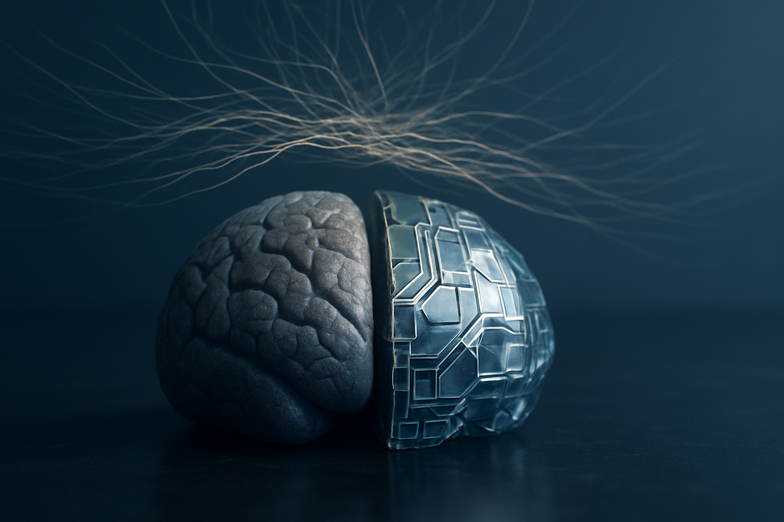
Bold question first: do Large Language Models really *understand*, or are they very good at mimicking understanding? That’s what Yann LeCun and Adam Brown spar about in a lively debate, moderated by Janna Levin, and I watched it thinking, wow, this is the place where theory meets real worry and real curiosity.
Start simple. Large Language Models, or LLMs, predict words based on patterns, that’s the core. But Yann LeCun, one of the pioneers behind deep learning and convolutional neural networks, pushes us to be precise about what “understand” means. Adam Brown, who’s helped shape advances at DeepMind (think Gemini), argues these systems are getting closer to something that looks like reasoning, at least in practice.
A little background, because context matters. Deep learning went from obscure to foundational in a few decades, largely thanks to researchers like LeCun, and now we’re testing its limits. The discussion, supported by the Alfred P. Sloan Foundation, doesn’t aim to settle everything, it aims to clarify, to push scientists and the public to ask better questions.
Practical scene: you ask an LLM to draft a heartfelt note or summarize a medical study, and it nails tone and structure. You feel understood. Then, it hallucinates a citation. You pause. That tension is exactly what LeCun and Brown dig into, balancing technical nuance with real-world impact.
If you want to see the full conversation, watch it here: Yann LeCun vs Adam Brown debate.
Where do we go from here? Expect more hybrid approaches, better testing for “understanding”, and tools that combine pattern power with grounded knowledge checks. I’m optimistic. We’ll keep building, questioning, and improving, and that process is exactly what moves the science forward.
Deutsch
Eine zentrale Frage gleich zu Beginn: „Verstehen“ Large Language Models wirklich, oder tun sie nur so? Genau darüber streiten Yann LeCun und Adam Brown in einem spannenden Gespräch, moderiert von Janna Levin, und ich fand das sofort fesselnd, weil hier Theorie auf echte Bedenken trifft.
Kurz zur Sache. LLMs sagen Wörter voraus, basierend auf Mustern, das ist das Fundament. Yann LeCun, Pionier des Deep Learning und der konvolutionalen neuronalen Netze, fordert eine präzise Definition von „Verstehen“. Adam Brown, der an Systemen wie Gemini bei DeepMind mitgearbeitet hat, betont, dass diese Modelle in der Praxis immer mehr Fähigkeiten zeigen, die wie Schlussfolgern aussehen.
Historisch gesehen ist Deep Learning in wenigen Jahrzehnten vom Nischenbereich zur Basis moderner KI geworden, und Forscher wie LeCun haben das möglich gemacht. Die Diskussion, gefördert von der Alfred P. Sloan Foundation, soll nicht alles klären, sie soll aber helfen, bessere Fragen zu stellen.
Ein Alltagsbeispiel: Du lässt ein Modell eine einfühlsame E-Mail schreiben, und der Ton sitzt. Du denkst, es versteht dich. Dann erfindet es eine Quelle. Dieser Widerspruch ist genau der Punkt, den LeCun und Brown beleuchten.
Wenn du das komplette Gespräch sehen willst, hier der Link: Yann LeCun vs Adam Brown debate.
Wohin geht die Reise? Wahrscheinlich zu hybriden Systemen, besseren Tests für „Verstehen“ und zu Modellen, die Pattern-Erkennung mit verlässlichem, überprüfbarem Wissen verbinden. Ich bin zuversichtlich. Wir bauen weiter, hinterfragen weiter, und genau das treibt die Forschung voran.













Kommentar abschicken