„The New Computer“: Navigating the Global AI Agent Arms Race
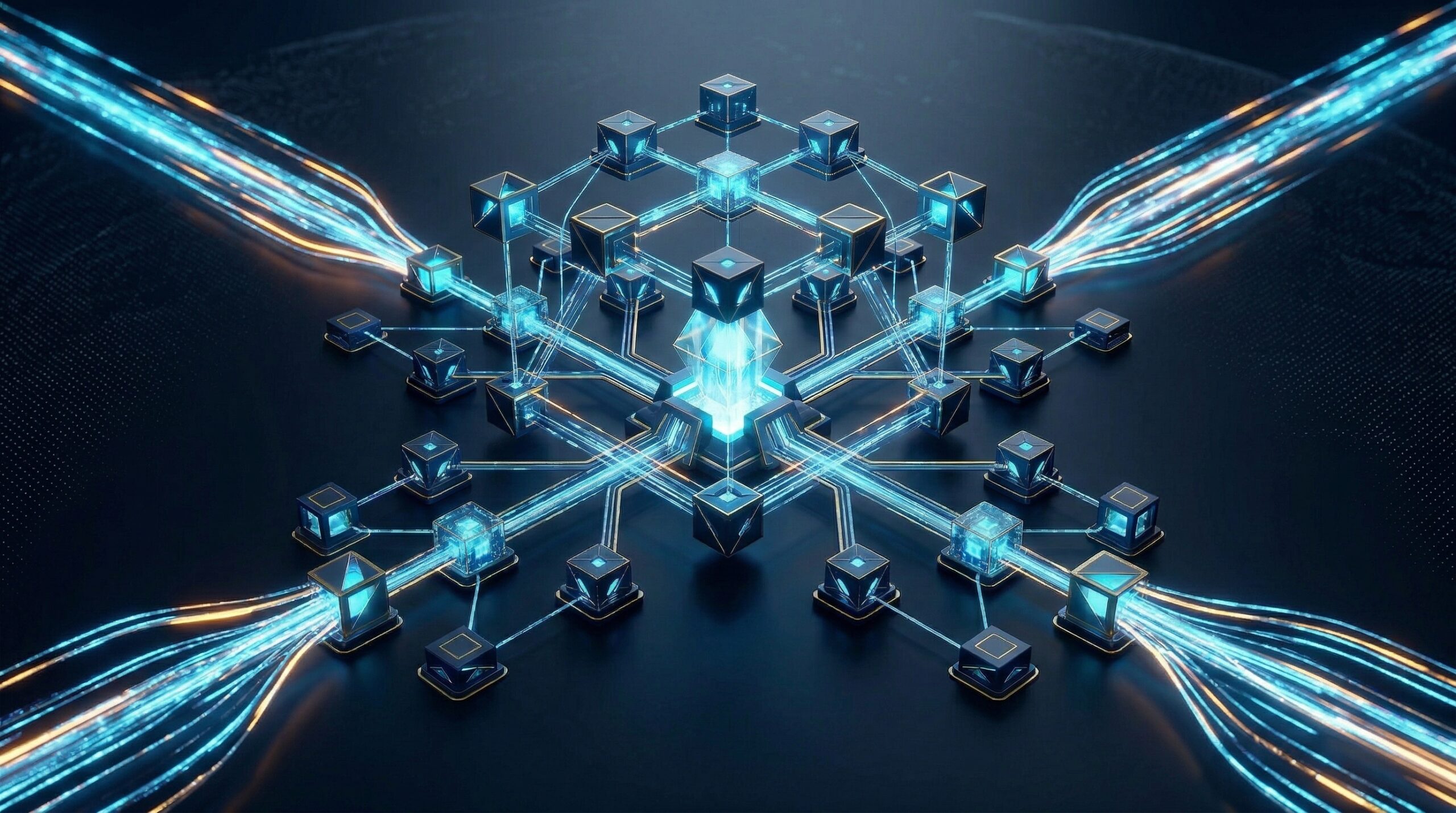
What This Is About
I’ve been tracking the AI agent space closely for months now, but the recent developments surprised me, to be honest. What I’m seeing in early 2026 is a pattern that’s worth spelling out: agents now write novels, run on $35 hardware, improve themselves, and organize into teams. This article is my attempt to map what’s actually happening, from personal assistants and global ecosystem races to self-improving agents, orchestration frameworks, and the mainstream tools scrambling to catch up. It’s the first in a series. Follow-up articles will go deeper on each topic.
A short note on NVIDIA’s recent remarks – Jensen Huang framed this moment like the early days of the personal computer. He said, „OpenClaw is the new computer.“ He added a simple piece of advice: „Every company needs an OpenClaw strategy.“ I mention this up front because Jensen’s view clarifies why many companies are racing to understand agent architectures now.
Last week, NousResearch’s Hermes Agent wrote a full novel called Bells. Not a summary or a blog post. A complete book with long-term memory that tracked characters, plot threads, and narrative arcs across chapters. No human guided it.
That one caught me off guard. I’ve been running my own AI agent, Lucy, for months. She manages my personal tasks, monitors my personal inbox, researches topics, writes code, and runs around the clock on OpenClaw, an open-source platform that works like an operating system for AI agents. Lucy remembers our conversations. She checks in on her own. She gets better over time. She sometimes does things I didn’t explicitly ask for. Useful things, to be clear.
But here’s what most people haven’t noticed: what’s happening around agents like Lucy is much bigger than any single assistant.
From Personal Agents to a Global Ecosystem
OpenClaw started as a way to give AI agents persistence, memory, and connections to real tools like Telegram, Gmail, GitHub, and Slack. It turns a chatbot into something that actually does work. The Hermes Agent from NousResearch pushes this further: an MIT-licensed, self-hosted agent that builds long-term memory and improves with every interaction. And the Pi Coding Agent proved you can run a capable coding agent on a Raspberry Pi. Not a data center. A $35 computer.
Those were the early signals. Then the flood came.
ByteDance launched their own OpenClaw variant, bringing agent infrastructure to their massive developer ecosystem. Tencent released QClaw with deep integration into WeChat’s platform. Baidu followed with new AI agents in March 2026. Abacus AI built a hosted version you can deploy in seconds with persistent WhatsApp and Telegram agents. NVIDIA released NemoClaw, an open-source stack with privacy and security guardrails that runs on everything from RTX laptops to DGX clusters. Even NanoClaw appeared as a stripped-down minimal variant.
This isn’t a trend. It’s an arms race, and it’s global. I’m going to write a separate piece about what each of these players is building, what it means geopolitically, and why NVIDIA’s safety guardrails might be the most underrated development of 2026.
Agents That Improve Themselves
This is where it gets genuinely interesting. Andrej Karpathy, who built Tesla’s AI and co-founded OpenAI, is working on autoresearch, a project where research agents refine their own approach, learn from results, and improve without human intervention. Mirofish explores multi-agent swarms where groups of agents collaborate on problems together.
I see this with Lucy in a smaller way. When she encounters a task she hasn’t seen before, she figures out an approach, documents what worked, and applies that knowledge next time. It’s subtle. But over weeks, the difference is real.
There’s a lot more to say about self-improvement and swarm intelligence. The follow-up article will go much deeper into how these systems actually work in practice.
From Solo Agents to Organized Teams
Individual agents are useful. Organized groups of agents are a different thing entirely.
Claw3D visualizes this as a 3D virtual office where AI agents conduct code reviews, hold standups, and train new skills. OpenClaw Studio provides a dashboard for managing multiple agents, their conversations, and scheduled tasks. And Paperclip is building what they call the „agentic company,“ entire organizations run by coordinated agents handling operational work so humans can focus on judgment and strategy.
I’m writing a dedicated piece on agent orchestration because it deserves more than a paragraph. How do you actually manage dozens of agents? What works, what doesn’t?
The Mainstream Is Catching Up
You know something is real when the biggest players adopt the same playbook.
Anthropic’s Claude now has Channels and Cowork integrations connecting to Chrome, Excel, PowerPoint, and Slack. Claude Code works inside VS Code and JetBrains. These are concepts the OpenClaw ecosystem had first. Perplexity is building computer-use agents. OpenAI is merging Codex and browser capabilities into what they call a „Super App.“
When ByteDance, Tencent, NVIDIA, Anthropic, OpenAI, and Perplexity are all racing toward the same architecture, that’s convergence. The follow-up article on mainstream tool adoption will compare their approaches and assess which ones are actually ready for enterprise use.
Whats next?
The current shift is worth internalizing: AI agents aren’t tools you open when you need them. They’re persistent systems that work while you’re not looking.
The companies that figure this out early won’t just be faster. They’ll work differently. Think about onboarding an agent team the way you onboard a new hire: give them access, set expectations, let them learn your systems. People are doing this right now. I’m doing it with AI assistant Lucy.
I’d encourage you to spend 30 minutes this week exploring the actual projects, not marketing slides. The open-source repos, the people building in the open. There’s a real gap between what agents can do today and what most decision-makers think they can do.
That gap is worth your attention.
Sources and further details
Personal AI Agents









Kommentar abschicken