Continual System Prompt Learning for Code Agents
Continual System Prompt Learning for Code Agents
If you’ve ever watched a coding assistant do something odd, even though its base model was trained with Reinforcement Learning, you’re not alone. The problem isn’t always the model, it’s the instructions we give it. Most teams still rely on static system prompts or an agent.md file, and those guides go stale fast. I’ve seen that in projects where one tiny instruction mismatch caused hours of extra debugging, so this struck a chord with me.
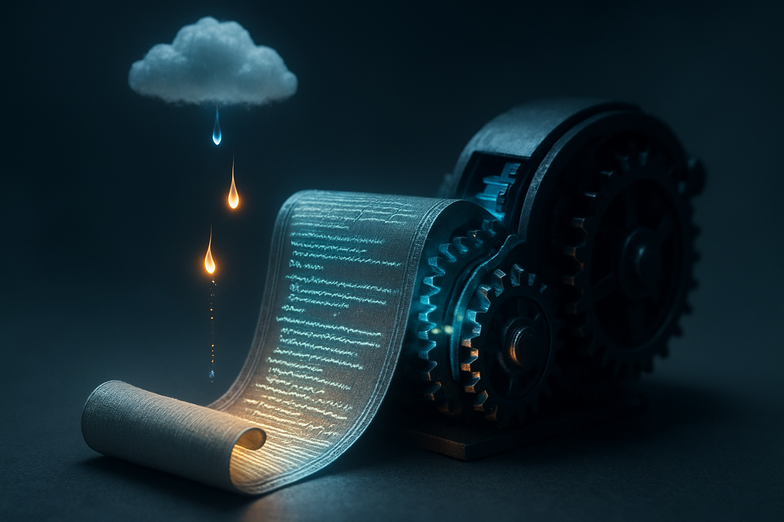
Enter the system-prompt learning loop, a simple but powerful idea presented by Aparna Dhinakaran at Arize. Instead of only tuning model weights with RL, this loop treats the prompts themselves as learnable objects. The agent collects real-world signals (pull requests, direct feedback, test failures, performance metrics), and uses reinforcement-style updates to refine its prompts over time. Think of it like A/B testing for the rules you give your assistant, but smarter and continuous.
Why this matters, practically: it helps coding agents adapt to your codebase, style guide, and team preferences automatically, making them easier to scale across an enterprise. It also makes behavior less opaque, because you’re iterating on explicit instructions rather than hidden model tweaks. In my experience, when teams let prompts evolve with real feedback, the number of repetitive mistakes drops, and onboarding new team members becomes easier (they get a living guide that actually reflects current practice).
Curious to see the idea in action? Watch the talk here: Continual System Prompt Learning for Code Agents.
Looking ahead, expect these loops to power safer, more predictable agents, with built-in evaluation and rollback. It won’t be perfect right away, but it’s a practical, optimistic step toward assistants that learn from your work, not just from generic training data.
Kontinuierliches System-Prompt-Lernen für Code-Agenten
Wenn du schon mal erlebt hast, dass ein Coding-Assistent merkwürdig agiert, obwohl das Modell mit Reinforcement Learning verbessert wurde, dann weißt du, wie frustrierend das ist. Häufig liegt die Ursache nicht im Modell, sondern in starren, handgeschriebenen System-Prompts. Solche Guides (zum Beispiel ein agent.md) veralten schnell, das kenne ich aus mehreren Projekten.
Die Idee der system-prompt learning loop ist elegant und praktisch. Aparna Dhinakaran von Arize zeigt, wie man nicht die Modellgewichte, sondern die Prompts selbst fortlaufend anpasst. Der Agent sammelt Signale aus der Praxis, etwa Pull Requests, direktes Feedback, Testergebnisse und Performance-Daten, und nutzt diese Informationen, um die Anweisungen schrittweise zu verbessern. Stell dir das vor wie kontinuierliches A/B-Testing für deine Regeln, nur automatisiert.
Der Nutzen ist klar: Agents werden anpassungsfähiger an deinen Code-Stil und Teamkonventionen, sie skalieren besser im Unternehmen, und ihr Verhalten wird nachvollziehbarer, weil Änderungen an klaren Prompts geschehen. Aus eigener Erfahrung kann ich sagen: wenn Prompts mit echten Rückmeldungen mitwachsen, sinken wiederkehrende Fehler, und neue Teammitglieder finden sich schneller zurecht.
Das Video zur Präsentation findest du hier: Continual System Prompt Learning for Code Agents. Insgesamt ist das ein pragmatischer, optimistischer Schritt zu Assistenten, die aus der täglichen Arbeit lernen und nicht nur aus abstrakten Trainingsdaten.



Kommentar abschicken