OpenShip: Self-Hosted Deployment for the Agentic Engineering Era
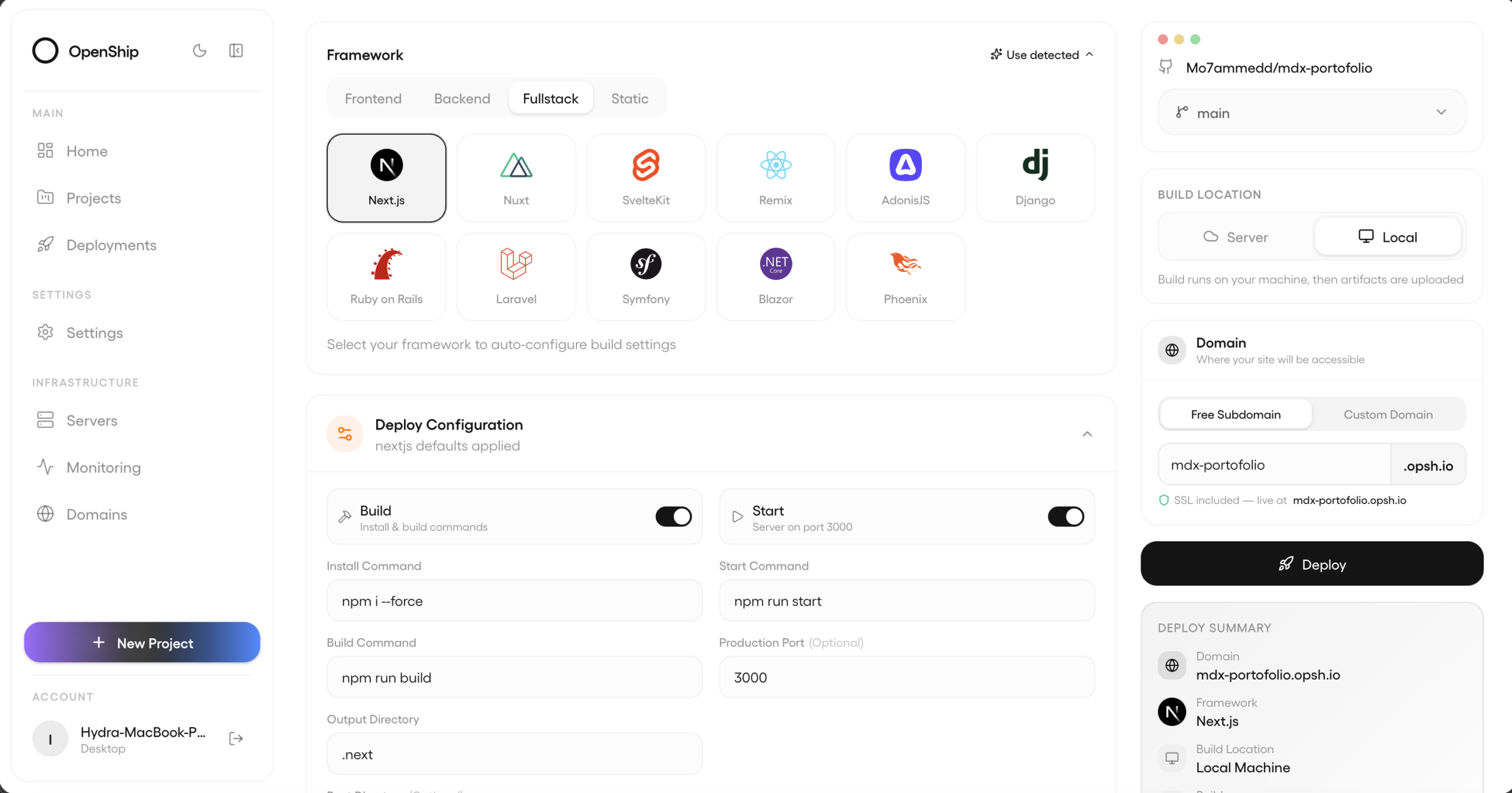
Coding agents can write more code. But someone still has to ship it.
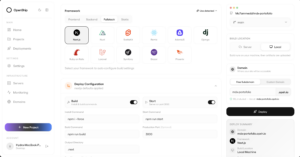
That is why OpenShip is worth a closer look. It is an open-source, self-hostable deployment platform with built-in CI/CD. The promise is simple: push code, ship containers, and manage infrastructure from a desktop app, web dashboard, or CLI.
In practical terms, OpenShip tries to remove the deployment plumbing that slows teams down. The README describes stack detection, deployment configuration, preview environments, staging and production flows, rollbacks, Docker support, domains, SSL, CDN, mail, backups, monitoring, and scaling from one place.
It supports a broad set of stacks, including Node, Python, Go, Rust, PHP, Ruby, Java, .NET, Docker, and monorepos. It can run with OpenShip Cloud or on any Linux server you own.
The timing is interesting because the software conversation is shifting quickly. We talk a lot about coding agents, autonomous pull requests, AI reviews, and software engineering agent factories. But a faster coding loop only creates value if the path to production is controlled, repeatable, and understandable.
Otherwise teams simply generate more work that gets stuck at the shipping dock.
That is the useful lens for OpenShip. It is not trying to be the agent. It is trying to become the deployment layer that makes shipping less bespoke.
For solo builders, that means less operational ceremony. For teams, it means a clearer path from repo to runtime. For agentic engineering workflows, it points to a missing piece: deployment infrastructure that agents and humans can both operate through.
Original repository: https://github.com/oblien/openship







Kommentar abschicken