The Future of Work in the Age of AI – Prof. Dr. Daniel Susskind

Professor Daniel Susskind’s talk on the future of work lands in a place a lot of AI commentary skips over. It doesn’t get trapped in buzz. It looks straight at what systems like ChatGPT and Claude are already doing, and then asks the awkward question that keeps showing up in boardrooms, policy meetings, and ordinary jobs too: what happens when machines can do more of the work we used to reserve for people?
You can watch the talk here: https://youtu.be/KfIY-01GyJs?si=V4ZtKN7ifXXDjwg4
Susskind’s examples are familiar, but that’s part of the point. AI is no longer just summarizing email drafts or answering trivia. It’s writing code, preparing complex documents, helping shape building designs, and even supporting medical diagnostics. That creeps into areas that once felt comfortably human, the kind of work we assumed would stay put for a long time. It doesn’t feel theoretical anymore. It feels operational.
What makes his perspective useful is the balance. He’s not selling collapse, and he’s not pretending everything will sort itself out. He argues for an *optimistic and pragmatic* response, which is probably the only serious stance left. Businesses need to rethink where human judgment adds the most value. Governments need to think about training, incentives, and the structure of work itself. And workers, well, they need room to adapt without being told to simply “reskill” as if that sentence solves everything on its own.
The talk also fits neatly into the Petersberger Gespräche, a forum built for real discussions about technology-driven change across business and society. That setting matters because this isn’t just about tools. It’s about how organizations behave when tools start taking on tasks that used to sit in the human center of the process.
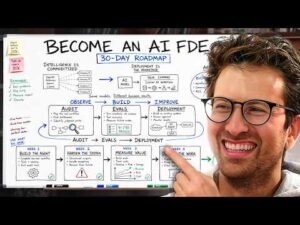
If you’ve been watching the rise of AI agents, this pairs well with Become AI Native in less than 60 mins, which looks at how companies can organize around these new capabilities.
The uncomfortable part is also the useful part. AI is already changing the shape of work, and the people who plan for that early will have far better options than the ones who wait for certainty that never arrives.


Kommentar abschicken