The People Who Will Thrive in the AI Age
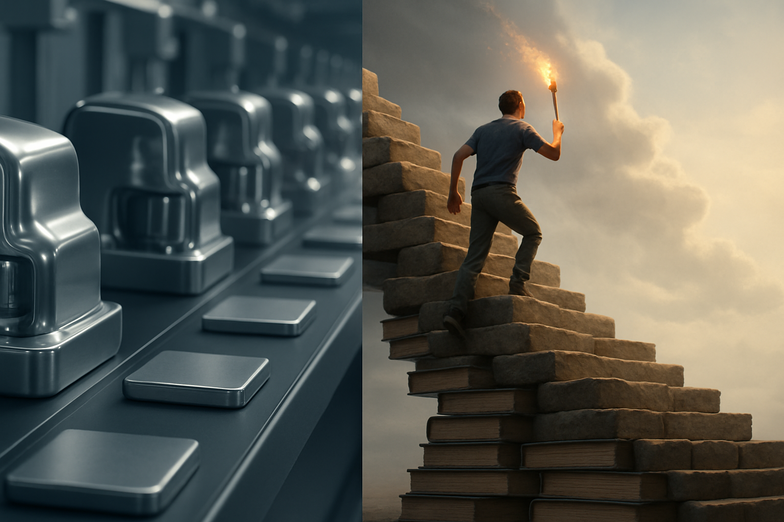
The Atlantic’s latest piece on AI and work lands on a question a lot of people are feeling but don’t always say out loud: what happens when the machine gets better, yet our days somehow get heavier?
You can read the original article here: The People Who Will Thrive in the AI Age
The article argues that AI isn’t simply removing work. In many cases, it’s making work more intense. Early adopters are spending far more time in email, messaging, and business apps, while also taking on tasks they used to avoid or outsource. The strange part is that the time saved by AI often doesn’t turn into rest. It turns into more work, more switching, more pressure. A little like clearing one room in your house and immediately deciding to renovate the whole place.
That’s where the article gets interesting. It says the real divide in the AI age won’t be intelligence in the usual sense. It’ll be people’s relationship to mental effort. Some people naturally lean toward hard thinking, not because it’s fashionable, but because they want to build their own capacity. Others will treat AI as a way to think less, and over time that can hollow out judgment, curiosity, and confidence. There’s research in the piece showing lower focus, weaker critical thinking, and even reduced performance after people lose access to AI they’ve been leaning on.
I think that rings true in business, too. The teams that do best won’t just be the ones with the most tools. They’ll be the ones who still know how to wrestle with a problem before handing it over. AI can speed up drafting, coding, analysis, and planning. But if you never stay with the hard part long enough, you stop building the muscle that makes those outputs meaningful in the first place.
The article ends on a practical note, and I think that’s the right place to land. Schools, managers, and organizations will need to design for motivation, not just efficiency. People need autonomy, competence, and some real connection to the work. Otherwise, we’ll keep producing more, while understanding less.
That’s the tradeoff worth watching. Not whether AI helps. It already does. The real question is whether it helps us stay mentally alive.






Kommentar abschicken