How the Open Knowledge Format can improve data sharing | Google Cloud Blog

Google Cloud’s new Open Knowledge Format, or OKF, is trying to solve a problem that shows up in almost every serious team sooner or later: the useful context is everywhere, and the systems that need it can’t agree on how to read it.
That sounds abstract until you’ve lived it. A metric definition lives in one wiki. The runbook sits in a repo nobody opens unless something breaks. A senior engineer knows the join path by heart, which is great until they’re on vacation. Then an AI agent comes along, or a new analyst, and everyone expects clean answers from scattered notes that were never built to travel well.
OKF takes a more practical route. It formalizes a familiar pattern, a markdown-based knowledge library with YAML frontmatter, files, links, and a few shared conventions. No new runtime. No heavy SDK. Just a format that humans can read and agents can consume without translation layers getting in the way.
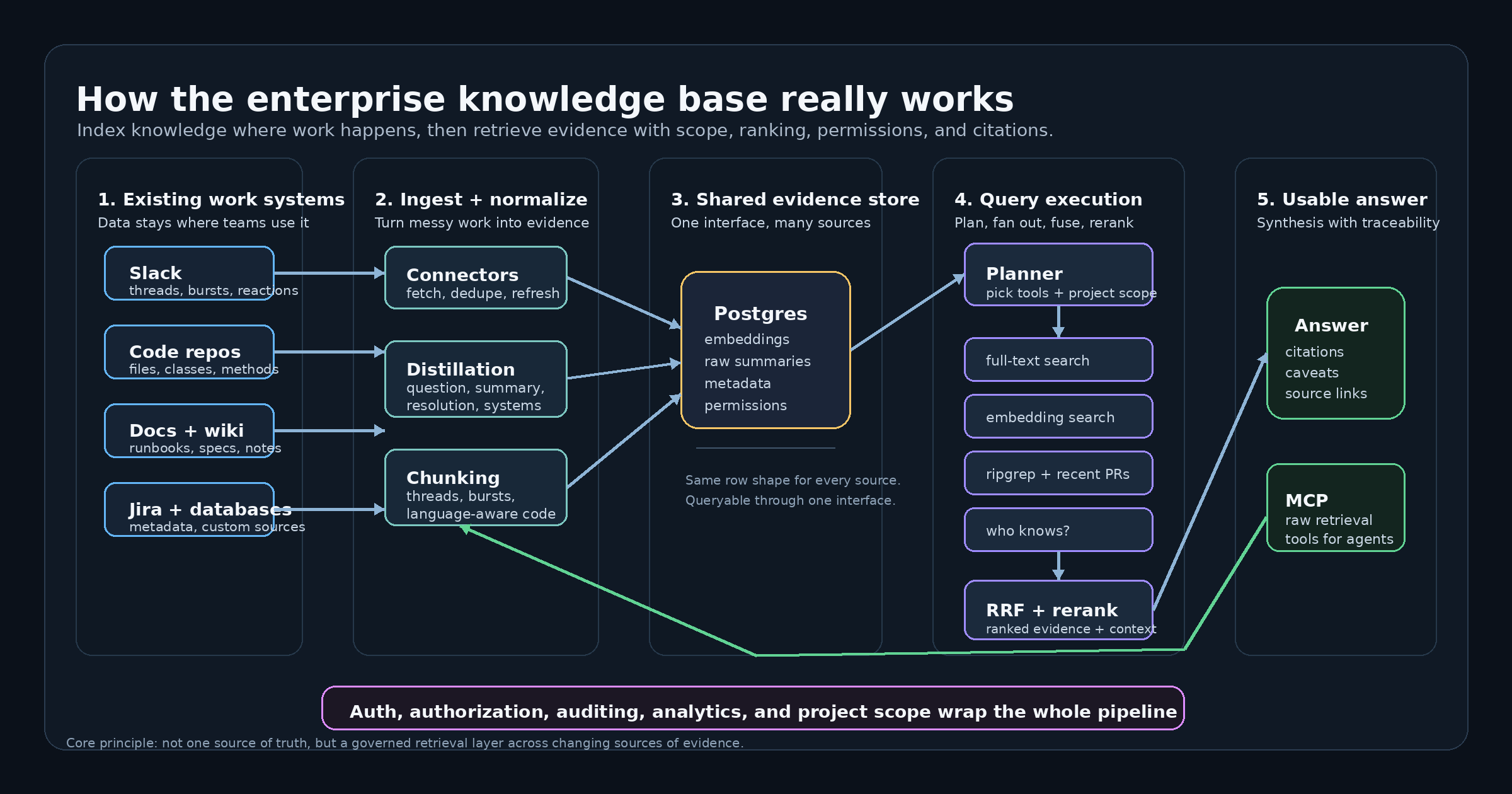
That’s the part that makes sense for real operations. You can version it with code, ship it as a bundle, index it, mount it, or hand it to another system without rebuilding the knowledge from scratch. In other words, the contract is in the file, not trapped in one vendor’s interface.
The structure is intentionally small. Each concept gets its own file, the path becomes its identity, and the rest is left open enough to fit how teams actually work. That matters because rigid knowledge systems tend to age badly. They look neat at first, then everyone quietly works around them.
There’s a clear business implication here. If your organization is going to use AI agents for internal work, the context layer can’t stay improvised forever. It needs to be portable, versioned, and understandable by more than one tool. OKF is one answer to that problem, and a sensible one at that.
You can read the announcement here: https://cloud.google.com/blog/products/data-analytics/how-the-open-knowledge-format-can-improve-data-sharing/?hl=en
It also rhymes a bit with Google Cloud’s earlier thinking around AI-native organizations, where shared context becomes part of the operating model rather than an afterthought: https://youtu.be/LztPaNmcWGU?is=RoCUnWZCzNJcUSga
The useful next step is not perfect knowledge, that rarely exists. It’s knowledge that can move, survive, and stay legible as your tools change around it. That’s a much better place to build from.




Kommentar abschicken